
Stormwater Pipe Relining in Bundaberg, QLD
What is included
What Is Included in Our Stormwater Pipe Relining
- We run a hose into the downpipe and watch the stormwater pit, to see whether water arrives.
- We lift the pit lid and check how much silt, leaf litter and broken pipe has gathered inside.
- We send the camera along the pipe from the pit, noting each crack, crush and gap.
- We jet out the silt and clay packed into the pipe, since the camera cannot see through it.
- Where roots or a protruding joint block the way, a cutter head clears them before lining begins.
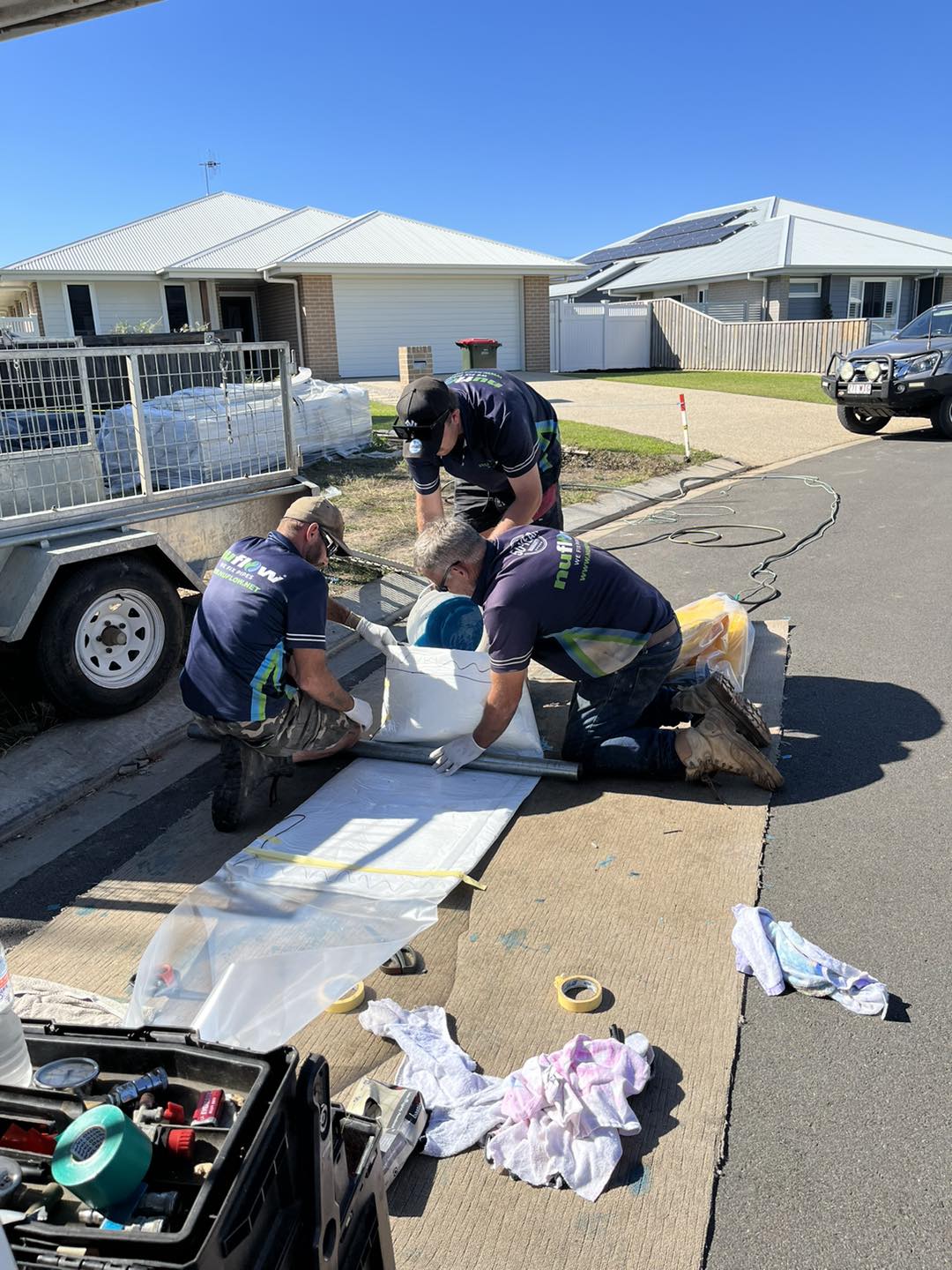
- The liner goes in from the pit, and a bladder presses it against the old pipe until the resin sets.
- We trim the liner back flush at the pit and at each downpipe connection.
- We run the hose again, watch the water leave through the pit, and show you the camera footage.
Why us
Why Choose Us for Stormwater Pipe Relining?
Accountable for every job, long after the day
Every stormwater pipe relining job is done by the people who will still be here next year.
Tested and signed off before we leave
Everything we touch on your stormwater pipe relining is tested before we go, you get walked through exactly what was done.
Local plumbers, not a call centre
A plumber answers the phone and the same faces come back if the job runs over a day.
How the job runs
Why we run a hose before we line
Tell us where water goes wrong
Tell us what happens in heavy rain, such as water pooling near the house, a downpipe overflowing, a soggy patch in the lawn or a pit that stays full. Photograph the stormwater pit and any downpipes that seem involved. Mention if a vehicle or heavy machinery has crossed that part of the yard, because buried pipes get crushed.
What we find, what it means
We run water from the downpipe and film the pipe from the pit. You see where it is cracked, crushed or full of roots, and we say whether it is still round enough to line. A pipe that has fully collapsed cannot be lined, and if we find one you hear that straight away, along with the other options.
Lining day and the water test
We clear the silt, cut away roots, fit the liner and let the resin cure. We plan the day around the weather, because rain running through the pipe mid-cure would disturb the liner. Before we pack up we run water through from the downpipe, watch it come out at the pit and show you the footage.
Common questions
Frequently Asked Questions
Which areas do you cover?
Bundaberg and the surrounding Wide Bay region. There are twenty suburbs and towns on the service areas page, from Moore Park Beach in the north to Woodgate in the south and Gin Gin in the west. If yours is not on the list it is still worth asking, because the list is where there are pages, not a boundary.
Do you work on homes and businesses?
Both. The work covers houses and units, and commercial and industrial sites. Ask about the specific place and what the job involves, and you will get a straight answer.
Do you do roofing?
No, roofing is not something we do. This site covers plumbing, drainage, pipe relining, gas fitting and hot water systems. If you need something that is not listed, such as gutters, ask when you call.
How do I book or ask a question?
Call 0485 033 237 on Monday to Friday between 7am and 4pm, email admin@nuflowwidebay.com.au, or send the form on the contact page. Say what the problem is and where you are, and send a photo if you can.
What is pipe relining?
Relining puts a new pipe inside the old one. A liner soaked in resin is pulled or inflated into the damaged pipe and left to harden, which leaves a smooth new surface inside the old pipe without trenching across the yard. It suits cracked, root-damaged and leaking pipes.
Can every damaged pipe be relined?
No. A camera inspection shows the condition of the pipe first. Relining suits many cracks, joints and root problems. A pipe that has collapsed or fallen apart may need a section dug up and replaced instead, and we tell you which one applies.
What does a drain camera inspection show?
A small camera on a flexible cable goes down the drain and the picture shows on a screen. It shows cracks, roots, joints that have moved, build-up and blockages, so the repair is chosen from what is actually in the pipe and not from a guess.
Why does my drain keep blocking?
A drain that blocks again and again usually has a cause, such as tree roots in a joint, grease building up, a pipe that has dropped or cracked, or something lodged in the line. Clearing it fixes today's problem. A camera shows the reason and what would stop it coming back.
What is hydro jetting and how is it different from rodding?
Hydro jetting sends high pressure water through a nozzle to scour grease, silt and roots off the pipe wall. Rodding pushes a cutting head through the blockage. Which one suits depends on what is in the drain and what the pipe is made of.
Which types of hot water system do you work on?
Gas, electric and heat pump systems, for repairs, installation and replacement. If you are not sure which type you have, send a photo of the unit and the rating plate on its side.
Should I repair or replace my hot water system?
It depends on the fault. A faulty valve, thermostat or element can often be repaired. A tank that is leaking from its body generally cannot be, and the unit needs replacing. We look at it and tell you which applies.
What gas work do you do?
Gas fitting and gas appliance installation, including connecting appliances, running gas lines and finding leaks, as well as gas hot water systems. If you smell gas, leave the building, keep away from switches and flames, and ring your gas supplier's emergency line or 000.
Related work
Other jobs we get called out for
blocked drain clearing
Slow and blocked drains in kitchens, bathrooms, laundries and yards cleared at the cause, with a camera used when the cause is not obvious.
Read moreCCTV drain camera inspections
A camera sent down the drain shows cracks, roots, offsets and blockages on screen, so the repair is chosen from what is actually down there.
Read morehigh-pressure drain cleaning
Water jets at high pressure scour grease, silt and roots off the pipe wall, which clears a drain and keeps it running longer than rodding does.
Read moreServing Bundaberg and The Surrounding Areas
Where we work
Ready when you are
Book Stormwater Pipe Relining in Bundaberg Today
Send a photo of the stormwater pit with its lid off if it lifts easily, and one of the lowest downpipe where it meets the ground. If you have a short video of water pooling in the rain, send that too. It shows us which end of the pipe to open first.
0485 033 237Monday to Friday, 7am to 4pm
Not urgent? Send us the job instead